
History of Haveri District

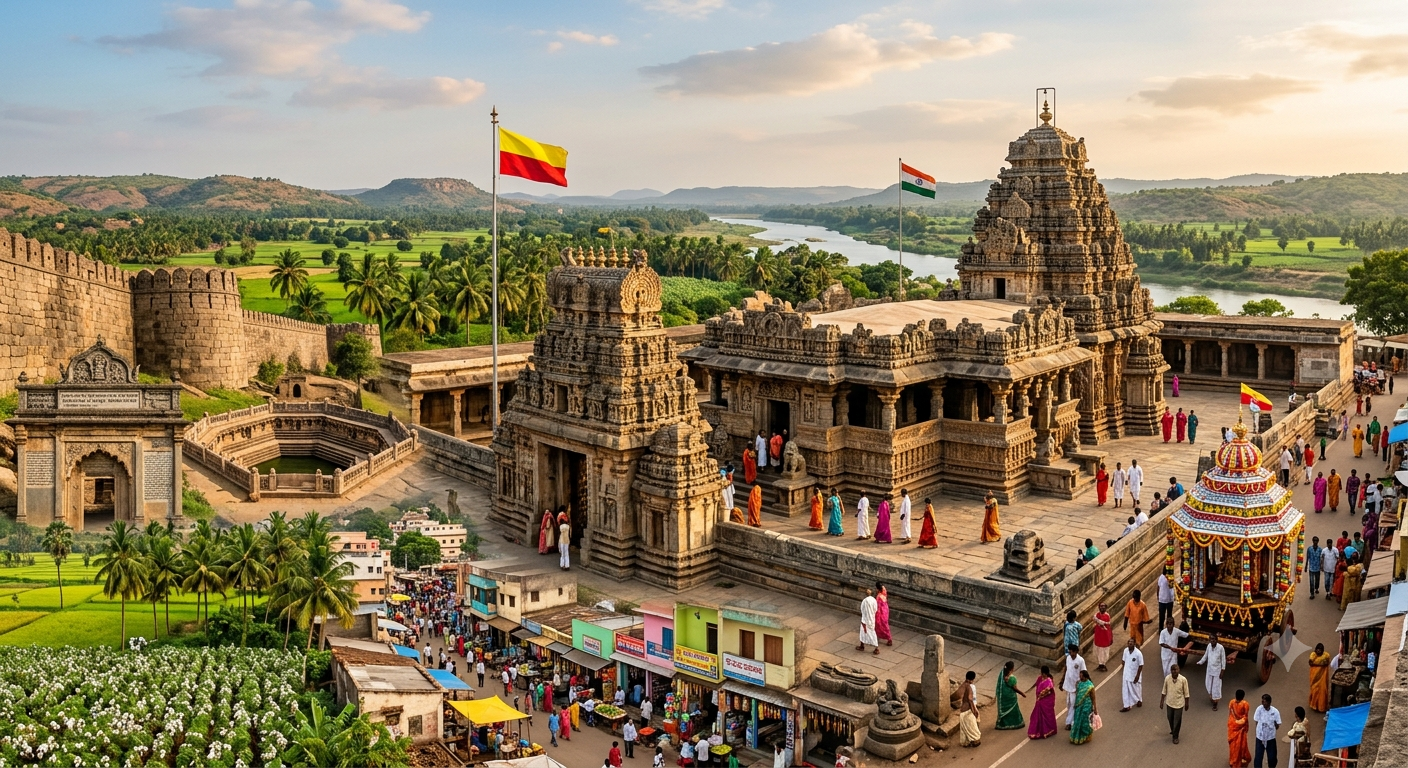
Haveri District, situated in the heart of Karnataka, is a land of rich history, vibrant culture, and enduring traditions. Its historical journey spans more than a thousand years, with the region flourishing under the rule of several powerful dynasties, including the Kadambas, Chalukyas of Badami, Hoysalas, Vijayanagara Empire, Marathas, and the British. Each of these rulers left a lasting impact on Haveri through magnificent temples, remarkable architecture, advancements in trade, and the promotion of art and literature. Among its most celebrated landmarks is the historic Siddheshwara Temple, renowned for its exquisite Chalukyan architecture, intricate stone carvings, and spiritual significance, attracting devotees and history enthusiasts alike.During the medieval period, Haveri emerged as an important center for religion, education, and commerce, connecting various parts of Karnataka through trade routes. The district also played a meaningful role during India’s freedom struggle, with many local leaders and freedom fighters contributing to the nation’s fight for independence. Under British administration, Haveri formed part of the Bombay Presidency, where improvements in administration, transportation, and agriculture laid the foundation for future development.
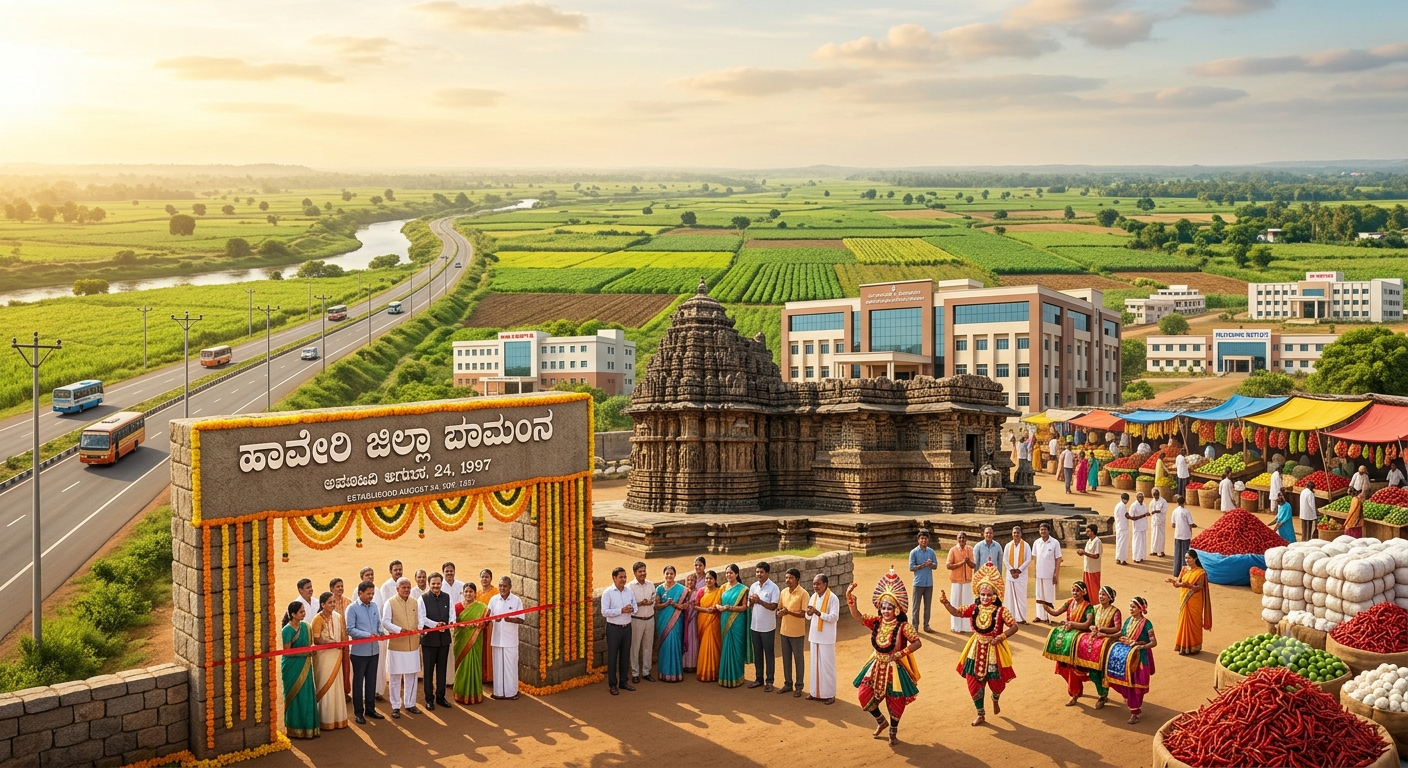
Recognizing its historical importance and administrative needs, Haveri was officially carved out of the former Dharwad District and established as a separate district on 24 August 1997. Since then, it has grown into a thriving district known for its agricultural excellence, educational institutions, healthcare facilities, and expanding infrastructure. Agriculture remains the backbone of the local economy, with crops such as paddy, maize, cotton, chilli, and groundnut playing a vital role in the livelihoods of its people.
Today, Haveri beautifully blends its glorious past with modern development. Its ancient temples, historical monuments, colorful festivals, traditional folk arts, and warm hospitality continue to preserve the district’s unique identity. As a gateway to Karnataka’s rich cultural heritage, Haveri stands as a symbol of history, spirituality, and progress, offering visitors and residents alike a glimpse into the state’s remarkable legacy while embracing a bright future.
District Overview
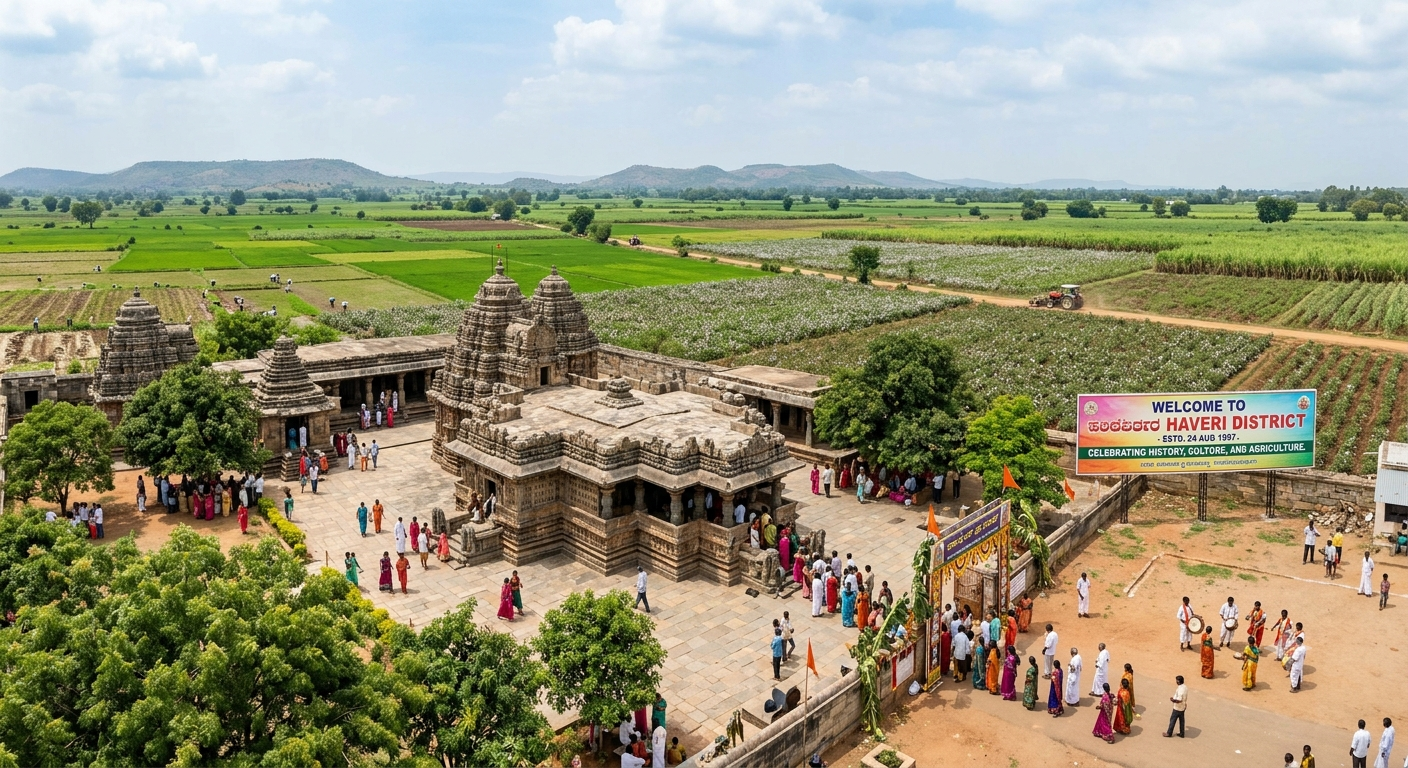
Haveri District, located in the heart of Karnataka, is a vibrant region celebrated for its rich history, cultural heritage, and agricultural prosperity. Established on 24 August 1997 after being carved out of the former Dharwad District, Haveri has grown into an important administrative, educational, and commercial center. Blessed with fertile plains and a favorable climate, the district is one of Karnataka’s key agricultural regions, producing crops such as paddy, maize, cotton, chilli, groundnut, and sugarcane.
The district is home to several ancient temples, historical monuments, and traditional art forms that reflect its glorious past under the Kadambas, Chalukyas, Hoysalas, and Vijayanagara rulers. Iconic landmarks like the Siddheshwara Temple showcase Haveri’s remarkable architectural heritage and attract visitors from across the country. Alongside its historical significance, the district is known for its colorful festivals, warm hospitality, and vibrant folk traditions that continue to preserve its unique cultural identity.
Culture & Heritage
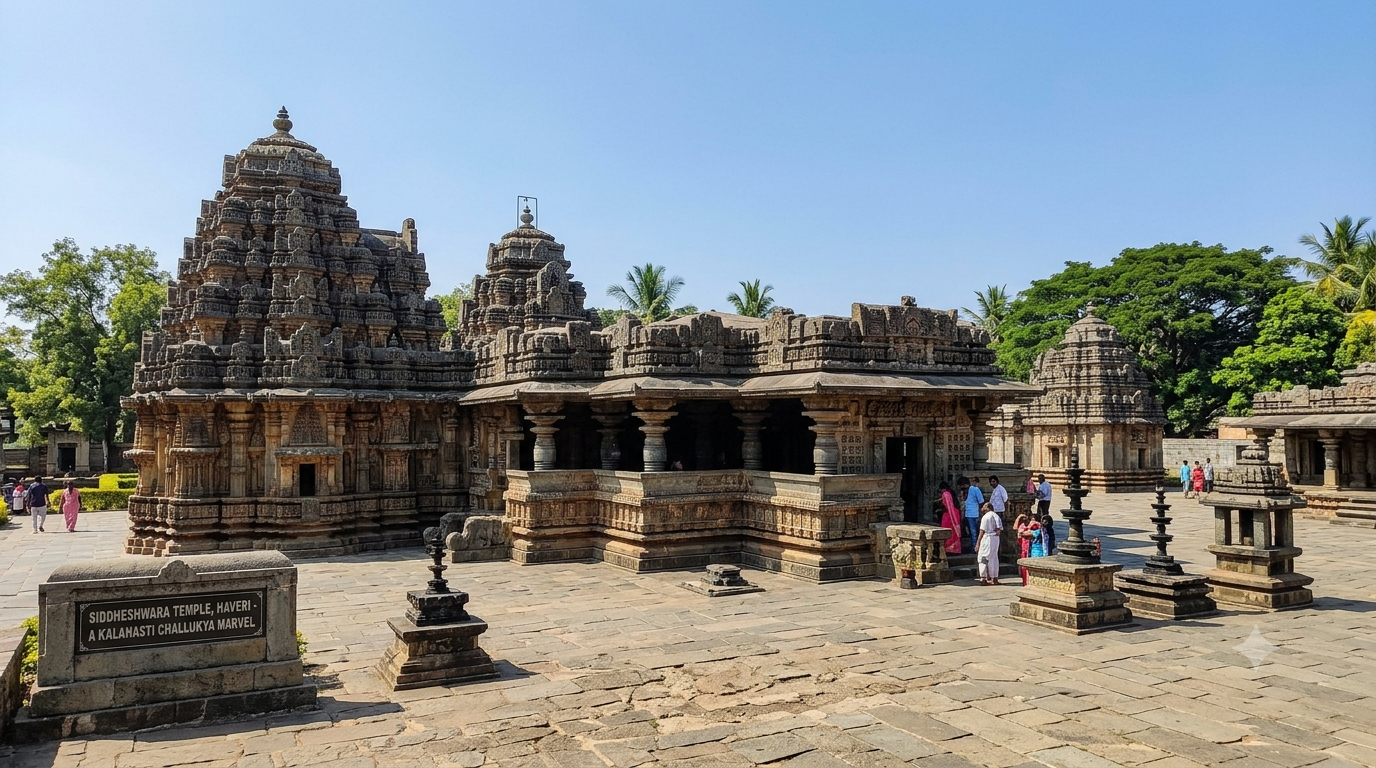
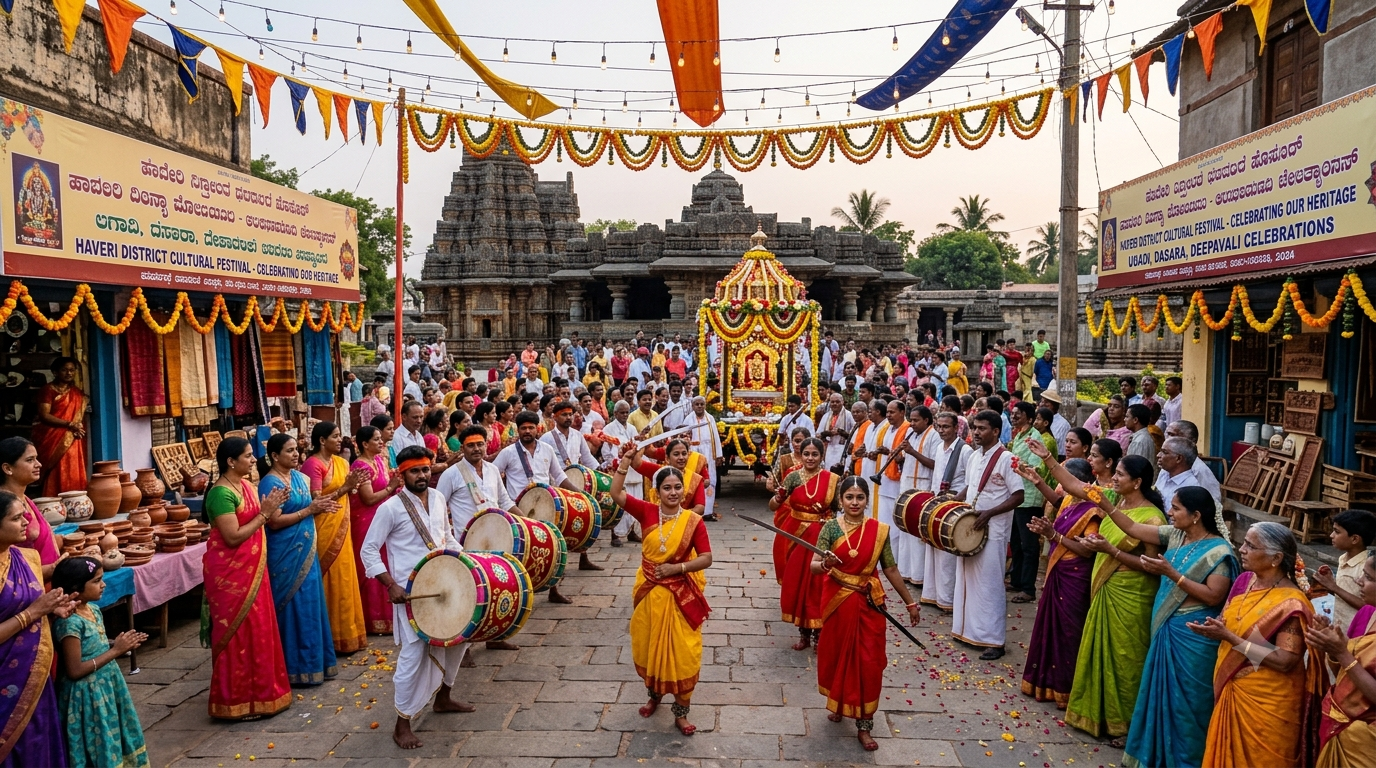
Haveri District is a treasure trove of Karnataka’s rich cultural and historical heritage. Influenced by the Kadambas, Chalukyas, Hoysalas, and Vijayanagara Empire, the district is home to magnificent temples, ancient monuments, and remarkable stone architecture that reflect centuries of artistic excellence. The renowned Siddheshwara Temple stands as a symbol of Haveri’s architectural brilliance and spiritual significance, attracting devotees and history enthusiasts throughout the year.
The district’s vibrant culture is expressed through its traditional festivals, folk music, dance, and local customs that have been preserved across generations. Celebrations such as Ugadi, Deepavali, Dasara, and Makara Sankranti bring communities together with colorful rituals, cultural performances, and festive spirit. Haveri is also known for its rich literary and artistic traditions, handicrafts, and warm hospitality, which contribute to its unique identity.
Economy & Development
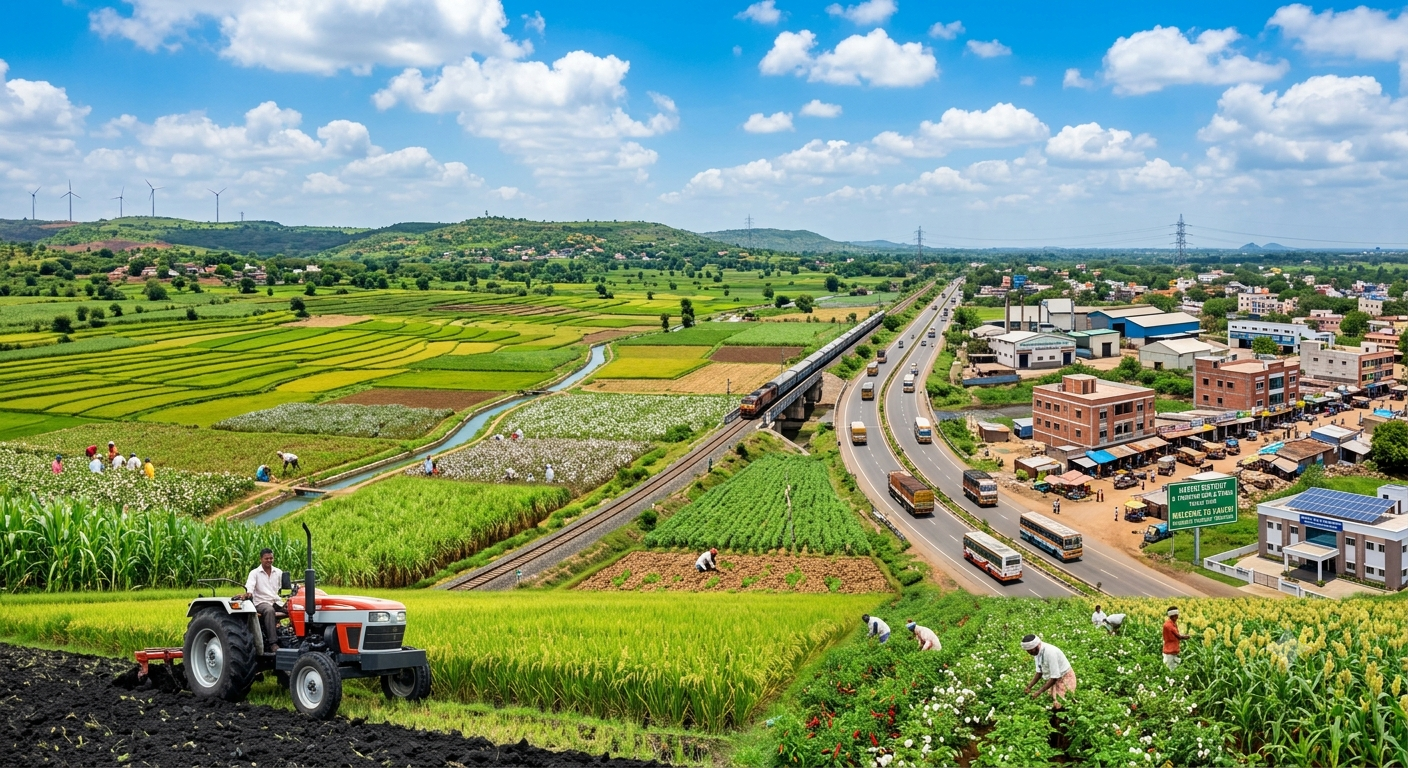
Haveri District has a strong and growing economy driven primarily by agriculture, trade, and small-scale industries. Agriculture remains the backbone of the district, with major crops such as paddy, maize, cotton, chilli, groundnut, sugarcane, and jowar contributing significantly to the local economy. The district also supports agro-based industries, dairy farming, and retail businesses, providing employment opportunities and strengthening rural livelihoods. Its strategic location and well-connected road and railway networks further promote trade and commercial activities across Karnataka.
In recent years, Haveri has witnessed steady progress in infrastructure, education, healthcare, digital governance, and public services. Improvements in transportation, irrigation, and government welfare initiatives have enhanced the quality of life and encouraged economic growth. With continuous investments in agriculture, entrepreneurship, and sustainable development, Haveri is emerging as a progressive district that successfully balances traditional livelihoods with modern development.
Geography & Climate
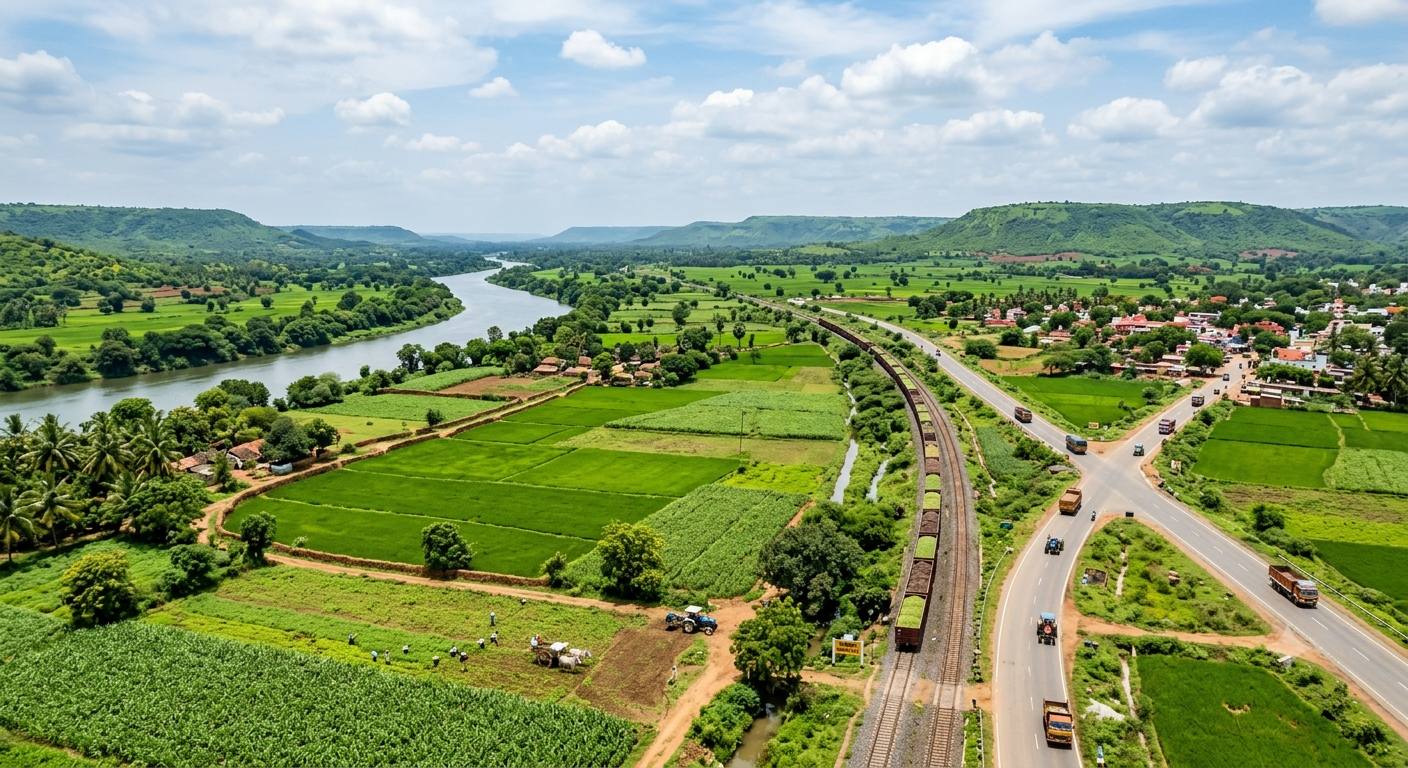
Haveri District is located in the central part of Karnataka and covers an area of approximately 4,823 square kilometres. The district is characterized by fertile plains, gently rolling landscapes, rivers, and rich agricultural land, making it one of the state’s important farming regions. It shares its boundaries with Dharwad, Gadag, Shivamogga, Davanagere, Uttara Kannada, and Ballari districts. Its strategic location and well-developed road and railway connectivity contribute significantly to trade, transportation, and regional development.
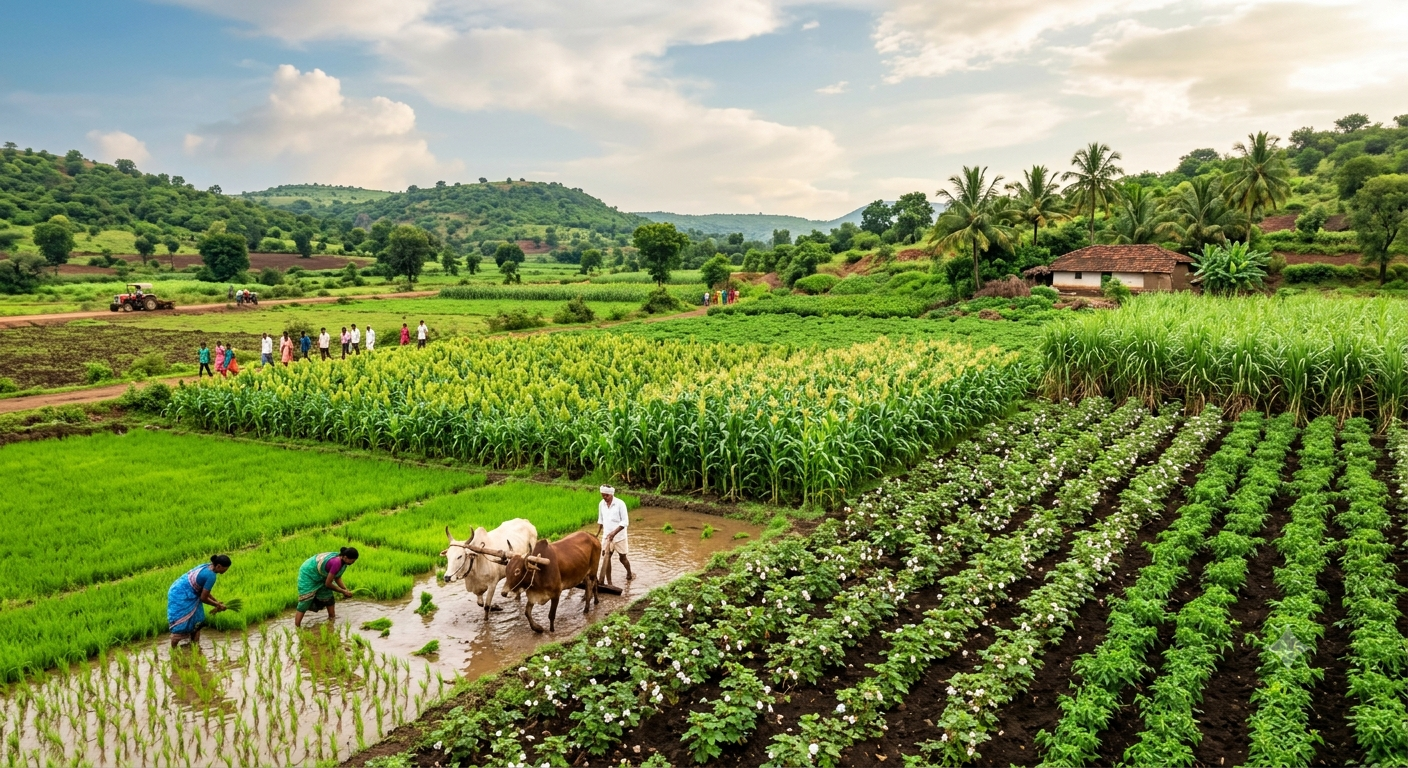
Haveri experiences a tropical monsoon climate with warm summers, moderate to heavy monsoon rainfall, and pleasant winters. The favorable climate and fertile black and red soils support the cultivation of major crops such as paddy, maize, cotton, chilli, groundnut, sugarcane, and jowar. These natural advantages make agriculture the backbone of the district’s economy while supporting sustainable growth and rural livelihoods.
Tourism Highlights
Major Towns
Ranebennur
Ranebennur is the largest commercial and industrial town in Haveri District and serves as a major economic hub in central Karnataka.
Hangal
Hangal is a historic town in Haveri District, famous for the Tarakeshwara Temple, ancient architecture, and its rich cultural heritage.
Byadagi
Byadagi is a renowned town in Haveri District, famous for its world-renowned Byadagi Red Chilli and thriving agricultural markets.
Shiggaon
Shiggaon is a prominent town in Haveri District, known for its educational institutions, agricultural activities, and growing infrastructure.
Administrative Divisions
Hirekerur Taluk
Headquarters: Hirekerur
Hirekerur Taluk is an important administrative division of Haveri District, playing a key role in governance, agriculture, rural development, and public service delivery. The taluk is known for its fertile agricultural lands, growing infrastructure, and well-connected villages, contributing significantly to the district’s economy and overall development.
Major Areas: Hirekerur, Masur, Rattihalli, Medleri, Hallur, Chikkerur, Kod, and surrounding villages.
Savanur Taluk
Headquarters: Savanur
Savanur Taluk is an important administrative division of Haveri District, known for its historical significance, agricultural activities, and commercial growth. The taluk plays a vital role in governance, public service delivery, and rural development while contributing to the district’s economy through agriculture and local trade.
Major Areas: Savanur, Huralikuppi, Chillurabadni, Karadgi, Tevaramellihalli, Mantrodi, and surrounding villages.
Haveri Taluk
Headquarters: Haveri
Haveri Taluk is the administrative headquarters of Haveri District and plays a vital role in governance, public services, education, healthcare, and regional development. As the district’s central administrative unit, it serves as a key hub for government offices, commerce, and civic infrastructure.
Major Areas: Haveri, Devagiri, Hosaritti, Kabbur, Yalagi, Neeralgi, and surrounding villages.